
歩道
歩道が歩きにくい。(笑)
一段高くなってるけど、家の前は車の進入用に斜めになっています。住宅街では家が続いて建っているので(だから住宅街)、半分ぐらいは斜面です。
その上、表面はガタガタ(車道ほど整備されていないから)。
場所によっては点字ブロックもあります。
自転車でもがたがたしますが、車椅子は通行不可。乳母車も危ないです。
そして、電信柱。宅地内には立てられないから(そして車道にも建てられないから)、歩道に立っています。
ゴミ置き場
そして、あちこちの歩道にゴミ置き場がおいてあります。昔はゴミの集積場所でしたが、カラスや野良犬、野良猫、ネズミ(最近見ないけど、どこに行っちゃったんだろう?)、キツネなどが散らかすので、網をかけたりしていました。
ところが、カラスは賢い。ちゃんと食べ物が入っている袋が分かってそれを突っつきます。引っ張ります。そして、ゴミを散らかします。
その上、人に襲いかかったりします。
そこで金属製の「ゴミ置き場」の登場です。各町内会が頑張って(争って?)設置しました。
どこに置くか
予算の問題は当然有るのですが、買える台数が決まったあとに問題になるのが、その設置場所です。誰もが遠くじゃなくて近くに置きたい。でも、自分の家の前はイヤです(笑)。臭いがすることも有るし、カラスや動物もイヤです。
そこで、空き地らしいところ、塀だけの場所などを見つけておくことになります。
町内会の物
町内会が設置したものなので、町内会の人しか利用させたくありません。遠くの地域、別の街からゴミを捨てに来られるとイヤですね。
地方自治体同士もそうです。東京でごみ焼却施設、埋立地を巡って自治体同士が対立しましたよね。国同士の争いもあります。
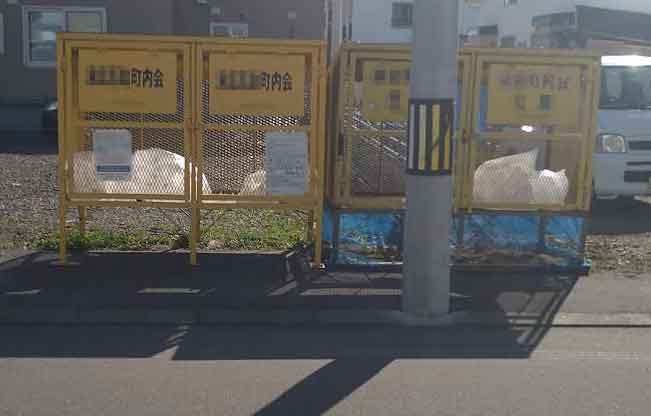
写真は、私が図書館に行く途中の風景です。たぶん、町内会の境なんでしょうね。
右のもののほうが古いので(同じ形、同じ色なので、そんなに時期が違っているのではないと思います)、先に設置されたんだと思います。右だけのときは左の町内会で隣接している家はそれに捨てたかったと思いますし、捨てたかもしれません。ゴミ置き場はたくさんあります。10〜数十メートルごとにありますが。
左の町内会が設置するときには、そのことが暗に明に問題になったのではないでしょうか。
それで、隣接して設置したのかもしれません。場所がそこしかなかったのかもしれません。あるいは、一つのカゴでは満杯になることが多い場所なので、二つ設置したのかもしれません。いずれも私の想像でしかありませんが。
〈公〉と〈ムダ〉
私のうちには「ラー油」が欠かせません。餃子が大好きだからです。家庭用の小さなものを買うのですが、たいてい「賞味期限」までになくなりません。それでも「ラー油だから大丈夫」と言い聞かせて使います。
「七味唐辛子」も常備していますが、あまり使いません。たま〜に使おうとすると、色が変わっていて全く風味がありません(^_^;)。しかたなく捨てて、新しく買うことになります。そうやって使い切れなくて捨ててしまうものが結構あるんじゃないでしょうか。〈ムダ〉ですよね。
その時、近所の何軒かで「七味唐辛子」を1本買って〈共有〉(〈公〉)できないかなあ、と思います。"Common Wealth"とするわけです。そうすれば、結構使い切ると思うし、いつも比較的新鮮な唐辛子を使えるのではないでしょうか。昔は近所の家での調味料の貸し借りは当たり前だったんですけどね。
〈公〉の意識というのは普段あまり意識しませんが、比較的簡単にできるんですよね。いまでは駅(鉄道の駅、道の駅)・デパート・キャンプ場のトイレではトイレットペーパーが使い放題ですが、持ち帰る人は少ないですよね。その昔は駅にトイレットペーパーは置いていなかったし、置いてもすぐに無くなってしまいました。生活が豊かになったという面もありますが、私は〈公〉の意識ができたんじゃないかと思います。[1]
四元素
火・空気(風)・水・土の4つの元素のことです。古代ギリシャ・ローマ、イスラーム、古代インドなどで世界の物質を構成するものとされました。ヨーロッパでも19世紀頃まではそう思われていたそうです。
それらは〈公〉のものでもありました。それが、まず「土」が私有化されます。所有の対象になったということです。同時に「売買の対象」にもなりました。でも、それは絶対のものではなかったし、至るところに共有地(入会地)がありました。放牧地も共有でした、というかそこは「所有概念」の及ばないところだったのです。そこに生えている木も共有財産でした。「おじいさんは山(共有地)に芝刈りに」行ったのです。
次に私有化されたのは「火」でしょうか。いつの頃からか自分で火をおこすことがなくなりました。薪はお金を出して買うものです。マッチも商品です。
その次は「水」でしょうか。井戸を掘れば水は自由ですし、川も海も誰のものでもありませんでした。漁業権などというものもありませんでした。「おばあさんは川に洗濯に」行きました。
それが、水道の普及とともに、商品になりました。その水道事業は公営ですが、いま民営化の圧力が強まっています。完全に商品になるのです。そして、街の自動販売機にはどこでも水が売られています。
空気はどうでしょう。いつだったか、「空気の缶詰」が話題になりましたが、いまのところ「息」をするのは自由なようです。ただ、新型コロナウィルスで「ソーシャルディスタンス」なるものが生まれ、空間は自由じゃないようです。マスクが義務化されれば息をする自由も制限される可能性があります。都内で「きれいな空気を吸える場所(施設)」ができた、という話を聞いたような。
四元素というのは、万物の根源と同時に人間や他の動物、植物、つまり生物が生きていくための条件です。公的な共有財産、"Common Wealth"です。それが誰かの物になる、商品化される社会というのはおかしいんじゃないでしょうか。
ゴミ(廃棄物)
日常の家庭から出るゴミ、そして核のゴミまで、さまざまなゴミがあります。
人間の廃棄物では、息を吐くことや、汗、うんこなどがあります。それは息を吸うこと、水を飲むこと、食べることに起因しますよね。域をしなければ、水を飲まなければ、食べ物を食べなければ人間の廃棄物はないわけです。でも、生きている間はそれらをしない、というわけにはいきません。代謝とか循環とか言われるもので、生物は全てそうです。
そして、その廃棄物(と言われるのも)は「他の生物」が利用しています。吐いた二酸化炭素は植物が利用する、というようにです。ところが、自分が出した排出物を自分が直接利用するというのは難しいのです(そういう生物はいるかも知れないけど)。
だから、排出したものは離れた場所に、つまり他の生物が利用できる場所に、置かなければなりません。[2]
「他の生物が利用できる」ということですから、量には限度があります。また、他の生物が利用できないものは排出してはいけません。[3]
代謝、循環
人間と他の生物(人間と豚、人間と稲、人間と微生物など)というのは相互依存の関係にあります。「宇宙から見れば、トウモロコシが人間を働かせて自分たちを育てさせているように見える」という話があります。視点を変えてみましょう。人間からの視点ではなく、動物からの視線を、植物からの視線を考えてみましょう。
同じことが、自分と他人にも言えます。あなたの目の前の人(あるいは遠く離れた地域に住んでいる人も)がいなければ、あなたもいないのです。相互に影響を与え、支え合っていきています。[4]
人間中心主義と自我意識は同じものです。合理主義や科学もそこから発生します。自分中心と自国主義はどこが違うのでしょうか。[5]
自我意識をもち、相互依存関係を見ないときに「自分の町内」という排他性が生まれます。もし、そのような気持ちでこのゴミ置き場を並べて設置したとすれば、寂しいというか、子供たちにそういう気持ちを植え付けることになりますね。
⟨impressions⟩
Sidewalk
The sidewalk is hard to walk. (Lol)
It's one step higher, but the front of the house is slanted for cars to enter. In a residential area, houses are built one after another (hence the residential area), so about half is a slope.
Besides, the surface is rattling (because it is not as well maintained as the roadway).
Braille blocks are also available in some places.
Bicycles rattle, but wheelchairs are not allowed. The baby carriage is also dangerous.
And the telegraph pillar. I'm standing on the sidewalk because I can't stand in the residential land (and I can't build it on the road).
Garbage storage
And there are garbage storage areas on the sidewalks here and there. It used to be a garbage collection place, but crows, stray dogs, stray cats, mice (I haven't seen it recently, where did you go?), And foxes are scattered around, so I used to net them.
However, the crow is smart. I know the bag that contains the food properly and poke it. Pull. And litter the trash.
Besides, it attacks people.
That's where the metal "garbage storage" comes in. Each neighborhood association did its best (conflict?) And set it up.
Where to put
Of course, there is a budget problem, but after the number of units that can be bought is decided, the problem is the installation location. Everyone wants to be near, not far. But I don't like it in front of my house (laughs). It may smell, and I don't like crows and animals.
Therefore, you will need to find a place that seems to be a vacant lot, a place with only a wall, and so on.
Neighborhood association
Since it was set up by the neighborhood association, I only want people from the neighborhood association to use it. I don't want to come to throw away trash from a distant area or another city.
The same is true for local governments. Local governments were in conflict over waste incineration facilities and landfills in Tokyo. There are also conflicts between countries.
The picture is the scenery on my way to the library. Maybe it's the border of the neighborhood association.
The one on the right is older (it has the same shape and the same color, so I don't think it's so different in time), so I think it was installed first. When it was only on the right, I think I wanted to throw away the adjacent house at the neighborhood association on the left, and I may have thrown it away. There are many garbage storage areas. Although it is every 10 to several tens of meters.
When the neighborhood association on the left was set up, that might have been an implicit problem.
Therefore, it may have been installed adjacently. Maybe there was only one place there. Or maybe I installed two because one basket is often full. Both are just my imagination.
"Public" and "Waste"
"Chili oil" is indispensable for me. Because I love dumplings. I buy small things for home use, but usually they don't run out by the "best-by date". Even so, I use it by saying, "It's okay because it's chili oil."
I always have "Shichimi pepper", but I don't use it much. When I try to use it occasionally, the color has changed and there is no flavor at all (^ _ ^;). I have no choice but to throw it away and buy a new one. I think there are quite a few things that can't be used up and thrown away. It's "waste", isn't it?
At that time, I wonder if I could buy one "Shichimi pepper" at some of the neighborhoods and "share" ("public"). It is "Common Wealth". That way, I think I'll use it up quite a bit, and I think I can always use relatively fresh peppers. In the old days, it was natural to lend and borrow seasonings at a neighboring house.
I don't usually think about "public" consciousness, but it's relatively easy to do. Nowadays, you can use all-you-can-use toilet paper in the toilets of stations (train stations, roadside stations), department stores, and campsites, but few people take it home. In the old days, I didn't put toilet paper at the station, and even if I put it, it disappeared immediately. There is also the aspect that my life has become richer, but I think I have become aware of "public". [1]
Four elements
It is the four elements of fire, air (wind), water, and soil. It was supposed to constitute the material of the world in ancient Greece / Rome, Islam, ancient India, etc. It seems that it was thought so in Europe until around the 19th century.
They were also "public". First of all, "soil" is privatized. It means that it has become an object of ownership. At the same time, it became a "buying and selling target". But it wasn't absolute, and there were commons (admissions) everywhere. The grazing land was also shared, or rather, it was beyond the scope of the "ownership concept". The trees growing there were also a common property. "Grandfather went to the mountain (common land) to mow the lawn."
Is "fire" the next privatization? From some time ago, I no longer set fire myself. Firewood is something you pay for and buy. Matches are also products.
Is it "water" next? If you dug a well, the water was free, and neither the river nor the sea belonged to anyone. There was no such thing as a fishing right. "Grandmother went to the river to do the laundry".
It became a product with the spread of water supply. The water system is publicly owned, but the pressure to privatize it is increasing. It becomes a complete product. And water is sold everywhere in the vending machines in the city.
How about the air? At some point, "canning of air" became a hot topic, but for now it seems that you are free to "breath". However, with the new coronavirus, a "social distance" was born, and it seems that space is not free. Mandatory masks can also limit your freedom to breathe. It seems that I heard that a "place (facility) where you can breathe clean air" has been created in Tokyo.
The four elements are the conditions for human beings, other animals, plants, that is, living things to live at the same time as the source of all things. It is a public common property, "Common Wealth". Isn't it strange that a society where it becomes someone's property and is commercialized?
Garbage (waste)
There is a wide variety of garbage, from everyday household waste to nuclear waste.
Human waste includes exhalation, sweat, and poop. It's because you breathe in, drink water, and eat. If you don't do it, you don't drink water, you don't eat food, there is no human waste. But I can't say I don't do them while I'm alive. It is called metabolism or circulation, and it is the same for all living things.
And the waste (also called) is used by "other organisms". It seems that the exhaled carbon dioxide is used by plants. However, it is difficult for me to directly use the emissions I produce (although there may be such organisms).
Therefore, the discharged material must be placed in a remote place, that is, in a place where other organisms can use it. [2]
There is a limit to the amount because it means that "other organisms can use it". Also, do not discharge anything that is not available to other organisms. [3]
Metabolism, circulation
Humans and other organisms (humans and pigs, humans and rice, humans and microorganisms, etc.) are interdependent. There is a story that "from the perspective of space, corn seems to work humans to grow them." Let's change the viewpoint. Consider the line of sight from animals, not the point of view from humans, and the line of sight from plants.
The same can be said for yourself and others. If there is no one in front of you (or someone who lives in a remote area), then you are not. We influence each other and support each other. [4]
Anthropocentrism and self-consciousness are the same. Rationalism and science also arise from it. What is the difference between self-centeredness and nationalism? [5]
When you are self-conscious and do not see interdependencies, you have the exclusiveness of "in your own town." If you set up these garbage storage areas side by side with that kind of feeling, you would be lonely, or you would instill that kind of feeling in your children.
[1] また最近、「コスト削減」という名前での〈公〉の破壊が進んでいる気がします。図書館という〈公〉も「コスト削減」「効率化」の名のもとに、その存在意義が忘れられそうです。
[2] 生物の種(しゅ)は、それぞれ、空間的、あるいは時間的な棲み分けをしています。光の周波数や、音の周波数でも棲み分けをしているのです。生物多様性は共棲と棲み分けが必要です。それを破ると大変なことになります。COVID-19、MERS、SARSはそれが原因ともいわれています。
[3] 排出物を遠くに置くというのは「衛生観念」とは関係ないと思います。水洗便所にしなくてもいいのです。ただ、都市の場合、かんたんに量的限界を超えてしまいます。人間が密集しすぎているからです。だから、遠くに運んで処理しなければならないのです。都市そのものが「自然に反するもの」なのかもしれません。
[4] あなたが話している言葉は、あなたが創ったものではありません。
[5] 交易が商業になるとき、これらのものが発生します。