ネタバレ注意
ずっと、カズオ・イシグロの『わたしを離さないで』(2010年英米 マーク・ロマネク監督)の日本版リメイクだと思っていました。
「寄宿舎」と「孤児院」、若干設定は違いますが、発想は同じです。そして、どちらも一般の社会から「隔離」されています。ただ、そこでの「飼育(?)」目的は若干違います。前者は「臓器移植」、後者は「食用」です。まあ、同じようなものですが、臓器移植なら、直接の現代社会批判です。でも、それを拡大して「家畜としての人間」にしてしまうと、批判が見えなくなってしまいます。まして、その家畜を食べるのが人間ではなく怪物であれば、その怪物を倒そうとする気持ちは薄くなります。
実際、孤児たちが行うのは「逃げる」という試みのみです。そして、希望(「約束のネバーランド」)はなんだかわかりません。ただ「直接には殺されないだろう場所」というだけです。そして、彼女たちが逃げ出せたとして、それが他の孤児院に影響を与えるのかどうかもわかりません。「経営者側」に多少のダメージは与えるかもしれませんが、システムはすぐに修復されます。そして「アップデート」されるでしょう。反抗は、システムのアップデート、強化を招くだけなのです。そして、別の孤児がまた育てられるのです。
システムの巨大化は、システムの複雑化を生み、管理の困難さを招きます。それが、崩壊のきっかけになる可能性はあります。しかし、管理方法も常に修正・アップデートされます。だから、簡単には崩壊しません。そして、その肥大化はシステム管理者側だけの崩壊とはならないでしょう。孤児たちを巻き込まざるを得ないのです。今の資本主義の構造(システム)と同じですね。
そうすると、孤児院で殺されるまで「知らないふり」をして楽しく暮らすか、「どうせ同じなら、反抗しようじゃないか」の二択になります。
多分、そこで最終的に問われるのは「他の孤児たちの存在」です。直接に身近にいて話ができるし、触れ合うこともできる「同じ孤児院にいる孤児」のことでもありますが、それは「他の孤児院にいる孤児」たちのことでもあります。でも、そう考えれば考えるほど、〈自分〉の存在は小さくなります。そして思い至ります。「私の〈存在〉ってなんなのか」。システム同様、私は〈存在〉しているのか。私が目をつぶれば、システムは見えないんじゃないか。
私がいなくてもシステムは存在するのか。私が寝ていてもシステムは存在するのか。〈私〉やシステムの存在は、私の「夢」でしかないんじゃないのか。私は、私が存在しなくてもシステムや他の孤児たちがいると思わされているだけなんじゃないか。
「唯物論」と「唯心論」の対立です。それは解決しない対立のような気がします。私は、私がいない世界を想像することはできても、それを〈体験〉することはできないからです。生きている私は死後の世界を体験することはできません。
さあ、お茶を一服飲んでリラックスしましょう。きっと、こう考えさせるのも〈システム〉の一部でしょうから。
Spoiler attention
I've always thought that it was a Japanese remake of Kazuo Ishiguro's "Never Let Me Go" (2010 British and American director Mark Romanek).
The settings for "dormitory" and "orphanage" are slightly different, but the idea is the same. And both are "isolated" from the general public. However, the purpose of "breeding (?)" There is slightly different. The former is "organ transplantation" and the latter is "edible". Well, it's similar, but organ transplants are a direct critique of modern society. However, if you expand it to become a "human being as a domestic animal", the criticism disappears. Moreover, if the livestock is eaten by a monster rather than a human, the desire to defeat the monster will be lessened.
In fact, orphans only try to "escape." And I don't know what the hope ("The Promised Neverland") is. It's just a " will place that will not be killed directly ". And if they could escape, I don't know if it would affect other orphanages. The system will be repaired soon, although it may do some damage to the "owner". And it will be "updated". Rebellion only leads to system updates and enhancements. And another orphan will be raised again.
The enormous size of the system creates the complexity of the system and makes it difficult to manage. That can trigger a collapse. However, the management method is also constantly fixed and updated. So it doesn't collapse easily. And that bloat will not be a collapse on the part of system administrators. We have no choice but to involve orphans. It's the same as the current structure (system) of capitalism.
Then, you have the choice of "pretending not to know" and living happily until you are killed in the orphanage, or "if they are the same, let's rebel."
Maybe the final question is "the existence of other orphans". It's also the "orphans in the same orphanage" that you can talk to and interact with directly, but it's also the "orphans in other orphanages". However, the more I think about it, the smaller the existence of "I". And I come up with it. "What is my" existence "?" Like the system, do I "exist"? If I close my eyes, I can't see the system.
Does the system exist without me? Does the system exist even if I sleep? Isn't the existence of "I" and the system only my "dream"? I'm just believed to have the system and other orphans even if I don't exist.
It is a conflict between "materialism" and "spiritualism". It feels like an unresolved conflict. I can imagine a world without me, but I can't "experience" it. Living I cannot experience the afterlife.
Now, let's relax with a cup of tea. I'm sure it's part of the "system" that makes you think this way.
[スタッフ・キャスト等]
監督:平川雄一朗[wiki(JP)]
製作:石原隆[wiki(JP)] 瓶子吉久[wiki(JP)] 市川南[wiki(JP)]
プロデュース:村瀬健[wiki(JP)]
プロデューサー:村瀬健 小林美穂[wiki(JP)]
ラインプロデューサー:大熊敏之[wiki(JP)]
原作:白井カイウ[wiki(JP)] 出水ぽすか[wiki(JP)]
脚本:後藤法子[wiki(JP)]
撮影:今村圭佑[wiki(JP)]
美術:清水剛[wiki(JP)]
編集:伊藤伸行[wiki(JP)]
音響効果:猪俣泰史[wiki(JP)]
音楽:得田真裕[wiki(JP)]
音楽プロデューサー:谷口広紀[wiki(JP)]
主題歌:ずっと真夜中でいいのに。『正しくなれない』
照明:小林暁[wiki(JP)]
録音:渡辺真司[wiki(JP)]
装飾:湯澤幸夫[wiki(JP)]
スタイリスト:百瀬豪[wiki(JP)]
ヘアメイク:山田みずき[wiki(JP)] 高桑里圭[wiki(JP)] (北川景子)
記録:栗原節子[wiki(JP)]
VFXスーパーバイザー:太田貴寛[wiki(JP)]
制作担当:宮森隆介[wiki(JP)]
監督補:塩崎遵[wiki(JP)]
<出演>
浜辺美波[wiki(JP)]:エマ
城桧吏[wiki(JP)]:レイ
板垣李光人[wiki(JP)]:ノーマン
渡辺直美[wiki(JP)]:クローネ
北川景子[wiki(JP)]:イザベラ
山時聡真
安藤美優
森優理斗
浅田芭路
秋本レイラニ
志村美空
溝口元太
木村皐誠
古橋キット
柴崎楓雅
ギラルド沙羅
太田しずく
佐藤遥灯
宮島さゆき
金子莉彩
石塚陸翔
矢野詩
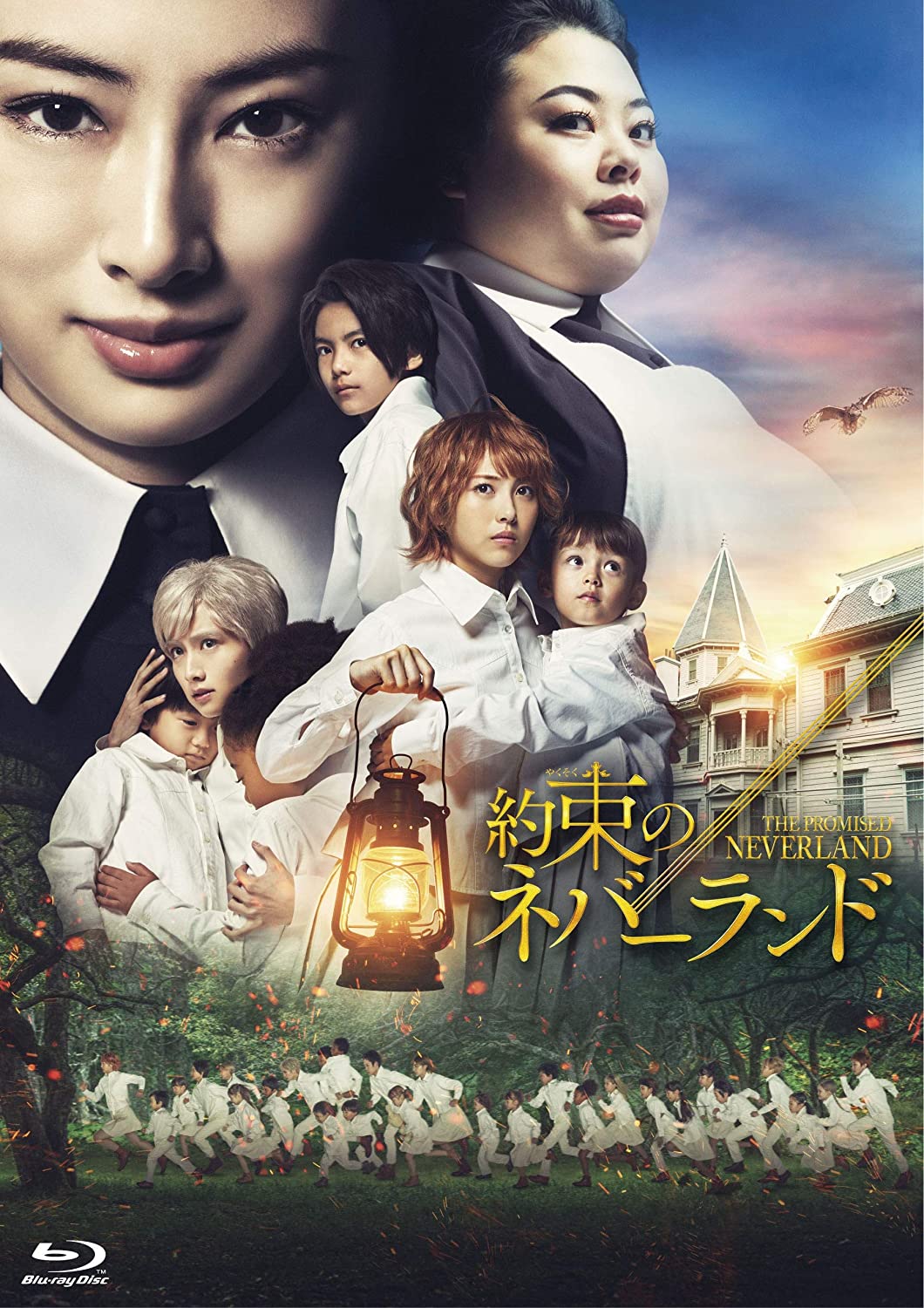
楽園のように平和で美しい孤児院“グレイス=フィールドハウス”。ママと呼ばれ孤児たちみんなから慕われているイザベラのもと、誰もが家族のように幸せに暮らしていた。そんなある日、天真爛漫で身体能力に優れたエマと頭脳明晰なノーマンは、ひょんなことから施設の恐るべき秘密を知ってしまう。2人は冷静沈着で物知りなレイに全てを伝え、協力して一緒に脱獄するための計画を練り始めるのだったが…。
映画
サスペンス
ファンタジー
アドベンチャー
日本 Color 119分
初公開日: 2020/12/18 公開情報:東宝 映倫:G