The real world is always in front of us, and we have no choice but to live in it. However, the reality in front of us just exists and is meaningless. It is humans who give meaning to that reality.
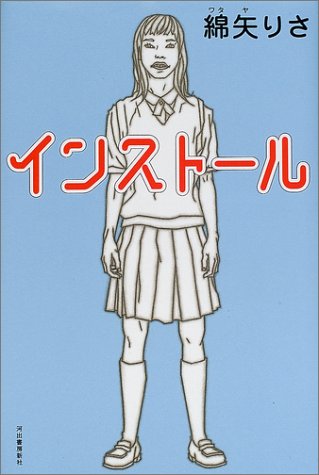
The adult world that an adolescent girl glimpses. It is also a virtual world created by adults. It seems that you can direct yourself in any way you want, but there is reality on the other side, and the virtual world naturally reflects that character. It is a dark but patterned illusion of sex (life).
The girl who knew the horror of that pattern would have grown up one step to think about the purpose of life. She, no she, she may have lost a part of herself instead of growing.
A child grows up while throwing away something one after another and deepening the remaining part from shallow but infinite possibilities. A "free society" provides that test. That must be the ritual for becoming an adult in Japan today.
And what will be left behind in the end, or how can you live without throwing away your potential? It is the “individual” and, more than that, the system of society that decides it.
Genichiro Takahashi says in the postscript of the paperback version that it is "perfect Japanese", but is that true? It is certainly a sentence without waste and without artificiality. However, it is the appearance of the completeness of language and sentences since the Meiji era, and the appearance of text expressions in mobile phone emails and chats spreading from "with friends" to the whole society. (Of course, the world of mobile phones and chats continues to escape from society and continues to change.)
The movie directed by K Kataoka is faithful to the original and faithfully reproduces the world of this book. Rather, it can be said that there is no way to dramatize it because the original is excellent and visual. Aya Ueto's performance is perfect, she is the main character of this book rather than an idol. I would like you to see the movie as well.