
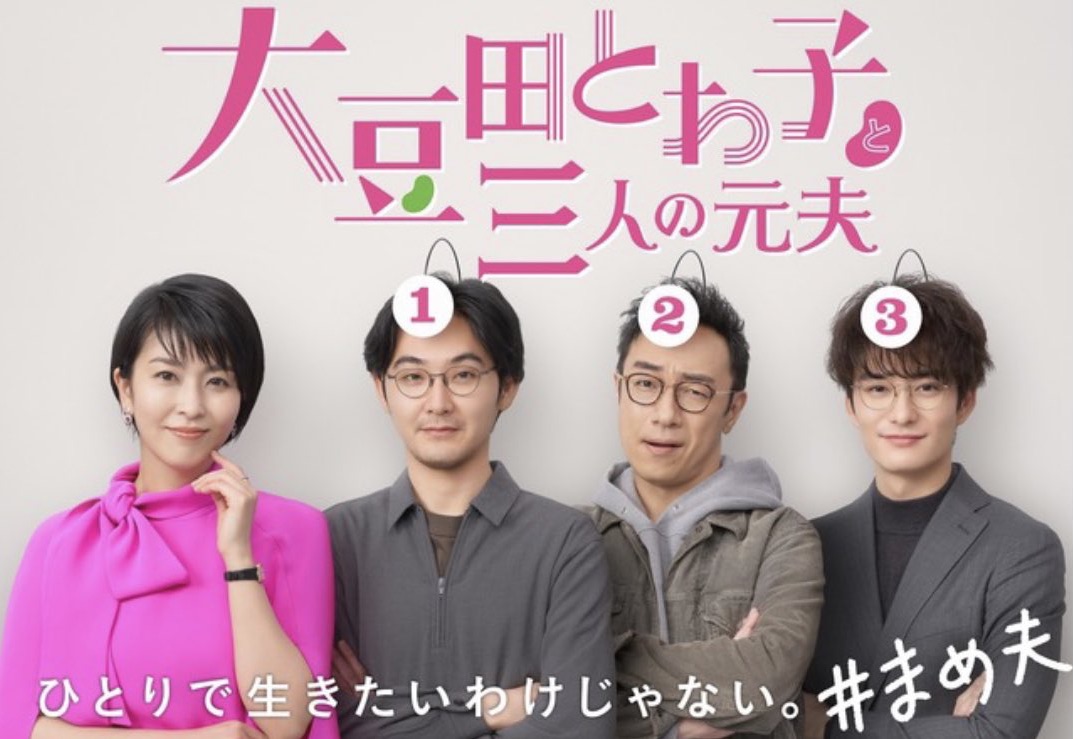
最先端のドラマ?
面白いのかもしれないけど、20分でやめました(後でみなおしました)。
ほとんどの作者は、分かって欲しいけど、わからないだろうな、と思ってると思います。だって、常に新しいことをやっているんだから。私はあなたじゃない私なんだから。私は私が命じるよに(命ずるままに)私を演じる(表現する)のみ、ってなんと複雑で無意味な言葉なんでしょうか。
なんか、バカにされたような気がしたのです。たまたま「不眠症」で、「自律神経失調」状態だったからかも知りません。(製作者の方々、ごめんなさい)
今は、売れている女優、俳優を使って、わかりやすい=視聴率が取れる、かつ出演者を傷つけることのない作品を作るのが至上命令でしょう。ヒットしなくても、出演者のプロフィールに「〇〇年 ~出演」というのが汚でなく載れるのが「仕事として」の最低条件です。
毎週、幾つかの時間帯で幾つかの放送局で、ドラマ(バラエティーでもいいです)が放送されています。全部を見ることが(それが仕事の人でなければ)むずかしいほどの量です。あなたは、いくつのドラマを憶えていますか。すぐ幾つかの番組を即座に挙げることができる人もいるでしょう。「懐かしの~」で「ああ、あれ、よかった(おもしろかった)な」と思う人は多いと思います。私もそうです。[1]
聞かれなければ(提示されなければ)思い出さなかった記憶。面倒なので言い切りますが、「それは、当時の現実そのもの、ではありません。それは、青春の断片(^_^;)であったり、失恋したときでああったり、告白されて恋愛の最中だったり・・・、その時のあなたの状況とともにあったはずです。だから、そのドラマは当時のあなた(私)を表わす「シンボル(象徴、トークン)」です。象徴なのは、そのドラマを観ても、多分、誰一人として当時のあなたの気持ちを再現できないからです。再現してもらいたくない、それは私一人の「大切な」思いだから、という気持ちを抱く人もいるかも知れません。(以下、別稿(^_^;))
活動写真に弁士は必要か
この作品の特徴は(20分しか観ていませんが)、伊藤沙莉ちゃんのナレーションがずっと入っていることです。全部説明してくれます。松たか子の心情まで。
活動映画の弁士(活動弁士)ですよね。『カツベン!』(周防正行監督、2019年日)という映画もあります(観てない。観たい。結菜ちゃんも出てるし)。「連続テレビ小説」でも、ナレーションが大きな比重を占めてます。日本の伝統なのでしょうか。[2][3]
初期の映画は「白黒」で「無声」でした。そこで、欧米ではテロップや楽器演奏とともに上映されるようになりました。
「動く画像(笑)」が明治時代に日本に入ってきたのですが、当然外国映画です。始めは映写機の説明から、そして映画の背景の説明、登場人物の説明、スートーリーに応じての説明等を行っていたのでしょうが、楽器を使った伴奏も行われていました。
それは必要だったのでしょうか。必要だったでしょうね。何を言っているのかがわからないのですから。英語の字幕(テキストショット)ではわからないですし。
音楽も大切です。ドラマや映画において「音(音楽)」は、ある意味で役者のセリフや表情、仕草以上に登場人物の心情や状況を表現します。[4]
バラエティーに字幕(テロップ)はいるか
動画でも、当然文字は表示できます。テレビの創成期から、ニュースでは字幕が流れていました。それは手話ニュースのようなものではなく、見出しのようなものです。また、文字を流すことでニュースの「正確さ(例えば数字の表示)」が担保されます。[5]
バラエティーではどうでしょうか。最近は、出演者の「一言一句」まで、テロップが流れていませんか(生放送が難しいのはテロップが付けにくいということです。でも、テロップがついている生放送もあるような気が(^_^;))。[6]
テロップは、カラフルです。男性の発言、女性の発言で色が違います。発言内容でも色が違います。書体も違います。大きさも太さも違います。ハートマークやビックリマーク、起こっているときの星型等々、さまざまなものが駆使されます。
そして、それは発言内容の修正も行います。足りないところを付け加えたり、いらないところをカットしたりします。
聞き取りにくかったギャグは、文字で補正されます(その補正が新しいギャグを創ったり、ギャグを確定したりします)。
普段、話をするときは相手の顔、特に目元、口元を見ますが(それを行き来しながら、顔の他の場所を見ます)、私は最近口元よりも画面の下の方にあるテロップを見てしまう自分がいることに驚いています。テロップを探してしまうんですね。なんか、理解力というか、感受性が下がっているような気がします。歳とともに、耳が悪くなっているせいかもしれません。(笑)
それは面白くない発言もギャグも、面白くしてくれます。存在しない「笑い声」(最近はスタッフの笑い声が効果的です)を加えるのと同じです。
ドラマにナレーションは必要か
さて、ドラマの話しに戻りましょう。
私は、無駄なセリフがとても気になります。役者は演技・表情で表現し、演出家はそれを最大限に活かすのが必要だと思っているからです。例えば、日常生活で「独り言」を言う人はどのくらいいるのでしょうか。
独り言で、心情を表すドラマが最近多いんじゃないでしょうか。状況(本来ト書きで表す部分)まで独り言で説明したりします。(^_^;)[7]
それらは、セットや照明、そして役者の演技で表現するものです。もちろん、声に出すことが強調や反語、伏線となるような「必要」な場合もあります。
ドラマは「全七話、一話45分」とかいう、秒単位の制約があります(もちろん、制作費(これは時間と密接な関係があります)やスポンサーという制約もあります)。[8]
ナレーションに状況や心情を表す以上の意味を持たせる演出はあります。このドラマもその一つでしょう。『俺の家の話』も、ナレーションをうまく使っていました。
でも、ナレーションにその効果以上の言葉を入れてはいけません。ナレーションは役者のセリフと同じだからです。ナレーションに「甘えてはいけない」のです。
『Star wars』は長いテロップから始まります。状況やあらすじを表しているのですが、あれもナレーションのようなものですよね(言葉と違ってテロップは速く流れすぎると読めませんし、遅いと時間がかかります。人によって読む速さは言葉以上に違います)。あれが『Star wars』を特徴づけているのですが、あれは成功しているでしょうか。当時は画期的でしたが、今見直すとどうでしょうね。
このドラマは、松たか子さんと松田龍平さんとのマシンガン掛け合いトークや角田さんの特徴的な語りなど、言葉を多用していますよね。脚本は『東京ラブストーリー』の坂元裕二さん。名脚本家です。
ドラマや映画は総合芸術ですが、「視覚」を重視した芸術です。カットの呼応、アングル、寄り等が重要です。そのため、演劇とは違った演技も必要になります(画面の大型化、4K、8Kとなると、また違ってきます。逆に、だからこそ4K、8Kが意味を持ちます)。言葉(音)の多用は視覚をさまたげる可能性もあるのです。
だから、ナレーションを多く使うことは一つの挑戦です。その挑戦が成功するかどうか、期待しています。
追記 Sun Apr 25 2021 01:00:34 (JST)
第二話観ました。面白いです。
⟨impressions⟩
State-of-the-art drama?
It may be interesting, but I stopped it in 20 minutes (I've done it later).
I think most authors want to know, but they don't. Because I'm always doing new things. I'm not you, I'm me. What a complicated and meaningless word I only play (express) me as I command (as commanded).
I felt like I was ridiculed. I don't know if I happened to have "insomnia" and was in an "autonomic imbalance" state. (Sorry, creators)
Nowadays, it is the highest order to use popular actresses and actors to create works that are easy to understand = audience rating can be obtained and that do not hurt the performers. Even if you don't make a hit, the minimum requirement for "as a job" is that "00 years-appearance" should appear on the performer's profile instead of dirty .
Every week, dramas (variety shows are fine) are broadcast on several stations at several times. It's hard to see everything (unless it's a work person). How many dramas do you remember? Some will soon be able to list some shows instantly. I think there are many people who think "Oh, that was good (interesting)" in "Nostalgic". Me too. [1]
Memories that I wouldn't remember if I wasn't asked (if not presented). It's a hassle, so I'll say it, "It's not the reality of the time ** itself. It's a fragment of youth (^ _ ^;) It must have been with your situation at that time, so the drama is a "symbol" that represents you (me) at that time. The symbol is that watching the drama probably doesn't allow anyone to recreate your feelings at the time. Some people may feel that they don't want to be reproduced because it's my own "important" feeling. (Hereafter, another article (^ _ ^;))
Do you need a benshi for activity photos?
The feature of this work (I only watched it for 20 minutes) is that it contains Sairi Ito's narracion all the time. Will explain everything. To the feelings of Takako Matsu.
You're a benshi (benshi) in an activity movie, aren't you? "Talking the Pictures! (Director Masayuki Suo, 2019) (I haven't seen it. I want to see it. Yuina-chan is also out). Narracion occupies a large part of "Continuous TV novels" as well. Is it a Japanese tradition? [2] [3]
Early films were "black and white" and "silent". Therefore, in Europe and the United States, it has come to be screened along with telops and musical instrument performances.
"Moving images (laughs)" came into Japan in the Meiji era, but of course it is a foreign movie. At first, I would have explained the projector, the background of the movie, the characters, and the story according to the story, but accompaniment using musical instruments was also performed.
Was it necessary? I think it was necessary. I don't know what you're talking about. I don't understand with English subtitles (text shots).
Music is also important. In dramas and movies, "sound (music)" expresses the emotions and situations of the characters more than the lines, facial expressions, and gestures of the actors in a sense. [4]
Does the variety have subtitles (telops)?
Of course, characters can be displayed even in videos. Since the early days of television, subtitles have been played in the news. It's not like sign language news, it's like a headline. In addition, the "accuracy" of news (for example, display of numbers) is guaranteed by playing letters. [5]
How about variety? Recently, isn't telop flowing up to the performer's "word by word"? (The difficulty with live broadcasting is that it is difficult to attach telop, but I feel that some live broadcasting has telop (^ _) ^;))). [6]
The telop is colorful. The colors are different depending on what the man says and what the woman says. The color is also different depending on the content of the statement. The typeface is also different. The size and thickness are different. Various things such as heart marks, surprise marks, star shapes when happening, etc. are used.
And it also corrects what you say. Add the missing parts and cut the unnecessary parts.
Gags that are difficult to hear are corrected with characters (the correction creates a new gag or confirms the gag).
I usually look at the other person's face, especially the eyes and mouth (as I go back and forth, I look elsewhere on the face), but I've recently seen a telop at the bottom of the screen than the mouth. I'm surprised that I have seen myself. You're looking for a telop. I feel that my comprehension, or sensitivity, has declined. It may be because my ears are getting worse as I get older. (Lol)
It makes uninteresting remarks and gags interesting. It's the same as adding a non-existent "laughter" (staff laughter is effective these days).
Does the drama need narracion?
Now, let's get back to the drama.
I'm very worried about useless lines. This is because the actors express themselves by acting and facial expressions, and the director thinks that it is necessary to make the most of it. For example, how many people say "soliloquy" in their daily lives?
I think there are many dramas that express emotions in soliloquy these days. I will explain the situation (the part that is originally written in To) in soliloquy. (^ _ ^;) [7]
They are represented by sets, lights, and actors' performances. Of course, there are times when it is "necessary" to speak out as an emphasis, irony, or hint.
The drama has a second limit, such as "7 episodes, 45 minutes per episode" (of course, there are also restrictions on production costs (which are closely related to time) and sponsorship). [8]
There is a production that makes the narracion more meaningful than expressing the situation and feelings. This drama is one of them. "The Story of My House" also used narracion well.
But don't put more words in the narracion than that effect. This is because the narration is the same as the lines of the actor. "Don't be spoiled" for the narracion.
"Star wars" begins with a long telop. It represents a situation or a synopsis, but it's also like a narracion (unlike words, telops can't be read if they flow too fast, and it takes time if they're slow. Depending on the person, the speed of reading is words. It's different than the above). That characterizes Star Wars, is it successful? It was epoch-making at that time, but how about reviewing it now?
This drama uses a lot of words, such as a machine gun talk between Takako Matsu and Ryuhei Matsuda and Mr. Tsunoda's characteristic narrative. The script is Yuji Sakamoto from "Tokyo Love Story". He is a great screenwriter.
Dramas and movies are general arts, but they are arts that emphasize "vision". The response of the cut, the angle, the approach, etc. are important. Therefore, it is necessary to perform differently from theatrical performances (the larger the screen, 4K and 8K, the different the performance. On the contrary, 4K and 8K are meaningful). Extensive use of words (sounds) can interfere with vision.
Therefore, using a lot of narracion is one challenge. I hope that the challenge will succeed.
State-of-the-art drama?
It may be interesting, but I stopped it in 20 minutes (I've done it later).
I think most authors want to know, but they don't. Because I'm always doing new things. I'm not you, I'm me. What a complicated and meaningless word I only play (express) me as I command (as commanded).
I felt like I was ridiculed. I don't know if I happened to have "insomnia" and was in an "autonomic imbalance" state. (Sorry, creators)
Nowadays, it is the highest order to use popular actresses and actors to create works that are easy to understand = audience rating can be obtained and that do not hurt the performers. Even if you don't make a hit, the minimum requirement for "as a job" is that "00 years-appearance" should appear on the performer's profile instead of dirty .
Every week, dramas (variety shows are fine) are broadcast on several stations at several times. It's hard to see everything (unless it's a work person). How many dramas do you remember? Some will soon be able to list some shows instantly. I think there are many people who think "Oh, that was good (interesting)" in "Nostalgic". Me too. [1]
Memories that I wouldn't remember if I wasn't asked (if not presented). It's a hassle, so I'll say it, "It's not the reality of the time ** itself. It's a fragment of youth (^ _ ^;) It must have been with your situation at that time, so the drama is a "symbol" that represents you (me) at that time. The symbol is that watching the drama probably doesn't allow anyone to recreate your feelings at the time. Some people may feel that they don't want to be reproduced because it's my own "important" feeling. (Hereafter, another article (^ _ ^;))
Do you need a benshi for activity photos?
The feature of this work (I only watched it for 20 minutes) is that it contains Sairi Ito's narracion all the time. Will explain everything. To the feelings of Takako Matsu.
You're a benshi (benshi) in an activity movie, aren't you? "Talking the Pictures! (Director Masayuki Suo, 2019) (I haven't seen it. I want to see it. Yuina-chan is also out). Narracion occupies a large part of "Continuous TV novels" as well. Is it a Japanese tradition? [2] [3]
Early films were "black and white" and "silent". Therefore, in Europe and the United States, it has come to be screened along with telops and musical instrument performances.
"Moving images (laughs)" came into Japan in the Meiji era, but of course it is a foreign movie. At first, I would have explained the projector, the background of the movie, the characters, and the story according to the story, but accompaniment using musical instruments was also performed.
Was it necessary? I think it was necessary. I don't know what you're talking about. I don't understand with English subtitles (text shots).
Music is also important. In dramas and movies, "sound (music)" expresses the emotions and situations of the characters more than the lines, facial expressions, and gestures of the actors in a sense. [4]
Does the variety have subtitles (telops)?
Of course, characters can be displayed even in videos. Since the early days of television, subtitles have been played in the news. It's not like sign language news, it's like a headline. In addition, the "accuracy" of news (for example, display of numbers) is guaranteed by playing letters. [5]
How about variety? Recently, isn't telop flowing up to the performer's "word by word"? (The difficulty with live broadcasting is that it is difficult to attach telop, but I feel that some live broadcasting has telop (^ _) ^;))). [6]
The telop is colorful. The colors are different depending on what the man says and what the woman says. The color is also different depending on the content of the statement. The typeface is also different. The size and thickness are different. Various things such as heart marks, surprise marks, star shapes when happening, etc. are used.
And it also corrects what you say. Add the missing parts and cut the unnecessary parts.
Gags that are difficult to hear are corrected with characters (the correction creates a new gag or confirms the gag).
I usually look at the other person's face, especially the eyes and mouth (as I go back and forth, I look elsewhere on the face), but I've recently seen a telop at the bottom of the screen than the mouth. I'm surprised that I have seen myself. You're looking for a telop. I feel that my comprehension, or sensitivity, has declined. It may be because my ears are getting worse as I get older. (Lol)
It makes uninteresting remarks and gags interesting. It's the same as adding a non-existent "laughter" (staff laughter is effective these days).
Does the drama need narracion?
Now, let's get back to the drama.
I'm very worried about useless lines. This is because the actors express themselves by acting and facial expressions, and the director thinks that it is necessary to make the most of it. For example, how many people say "soliloquy" in their daily lives?
I think there are many dramas that express emotions in soliloquy these days. I will explain the situation (the part that is originally written in To) in soliloquy. (^ _ ^;) [7]
They are represented by sets, lights, and actors' performances. Of course, there are times when it is "necessary" to speak out as an emphasis, irony, or hint.
The drama has a second limit, such as "7 episodes, 45 minutes per episode" (of course, there are also restrictions on production costs (which are closely related to time) and sponsorship). [8]
There is a production that makes the narracion more meaningful than expressing the situation and feelings. This drama is one of them. "The Story of My House" also used narracion well.
But don't put more words in the narracion than that effect. This is because the narration is the same as the lines of the actor. "Don't be spoiled" for the narracion.
"Star wars" begins with a long telop. It represents a situation or a synopsis, but it's also like a narracion (unlike words, telops can't be read if they flow too fast, and it takes time if they're slow. Depending on the person, the speed of reading is words. It's different than the above). That characterizes Star Wars, is it successful? It was epoch-making at that time, but how about reviewing it now?
This drama uses a lot of words, such as a machine gun talk between Takako Matsu and Ryuhei Matsuda and Mr. Tsunoda's characteristic narrative. The script is Yuji Sakamoto from "Tokyo Love Story". He is a great screenwriter.
Dramas and movies are general arts, but they are arts that emphasize "vision". The response of the cut, the angle, the approach, etc. are important. Therefore, it is necessary to perform differently from theatrical performances (the larger the screen, 4K and 8K, the different the performance. On the contrary, 4K and 8K are meaningful). Extensive use of words (sounds) can interfere with vision.
Therefore, using a lot of narracion is one challenge. I hope that the challenge will succeed.
[キャスト・スタッフ等]
制作著作 カンテレ
演出:中江和仁 池田千尋 瀧悠輔
プロデュース:佐野亜裕美
脚本:坂元裕二
音楽:坂東祐大 制作協力 カズモ
<出演>
松たか子:大豆田とわ子
岡田将生:中村慎森
角田晃広:佐藤鹿太郎
松田龍平:田中八作
市川実日子:綿来かごめ
高橋メアリージュン:松林カレン
弓削智久:三上頼知
平埜生成:城久間悠介
穂志もえか:大壺羽根子
楽駆:黒部涼
豊嶋花:大豆田唄
石橋静河:三ツ屋早良
石橋菜津美:小谷翼
瀧内公美:古木美怜
近藤芳正:六坊仁
岩松了:大豆田旺介
松たか子が、問題はあるが明るくてユーモラスでキュートなバツ3女性に! ...
TV
ドラマ
日本
2021/04/13 ~ | 火曜日 | 21:00~21:54 | 関西テレビ / フジテレビ
[1] 作品は「いいものはいい」「わるいものはわるい」(「いいものもあれば、悪いものもある」「まあ、同じようなものですが」『スネークマン・ショー』)。
[2] 「声優」というジャンルも、そこから発生しているのではないでしょうか。
[3] ラジオの普及で、「連続ラジオ小説」が大流行したときも、状況や登場人物の表情、心情を説明するために、「松子は途方に暮れるのであった〜」とかのナレーションが必要でした。
[4] AV(アダルトビデオ)では、セックスシーンではほとんど音楽が流れません。セックスシーンにコミカルな音楽を流すのと、シリアスな音楽を流すのとでは全然意味が違ってきますよね。
[5] でも、すぐに消えてしまって、録画していない限り証拠にはなりませんが。
[6] 国会中継でテロップが出るのは質問内容を事前通告(事前に何を質問するのかを相手に知らせる)しているからです。
[7] ジャ〇〇○の「人気はあるけど演技をしたこともない」ような人を使わなければならないので、演出家はたいへんです。(笑)
[8] 作品というものは、全て、その制約の中で何を創れるかということだと思います。たとえ、無限の制作費があったとしても、江戸時代にテレビドラマは作れません。(笑)
[拡大]